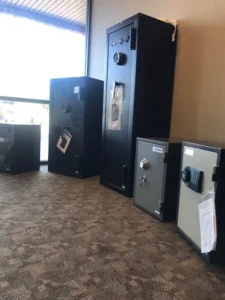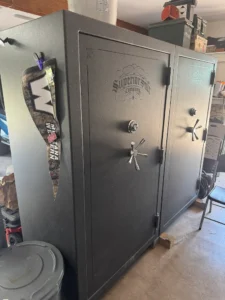

A fireproof home safe can weigh between 300 and 800 pounds even before you place a single document or heirloom inside it. People are increasingly installing UL-rated burglary safes in luxury homes across the North Valley. These units can exceed 1,500 pounds, which is heavier than a grand piano. UL Solutions tests and certifies these safes by measuring how much force and how much time it takes to break into them. This is exactly why manufacturers build them from solid steel and poured concrete instead of lightweight sheet metal. The material’s high density works as a strong security feature when the safe stays in place. It creates a serious drawback when you need to move it. One incorrectly positioned dolly on imported travertine or flooring made from century-old textile blocks can turn a simple move into a repair bill that reaches five figures.
For years, North Valley Locksmith has been carrying out safe re-keying, servicing, and relocation throughout the North Valley. In the Biltmore Estates area, the job requires more precision than anywhere else. The neighborhood’s architecture is based on the work of Frank Lloyd Wright and has seven-figure interior values with no room for error. Most online guides that explain how to move a safe are made for suburban split-level homes with straight hallways and two-car garages. However, Biltmore Estates is not that kind of area, and we do not treat it as such.
Why Biltmore Estates Homes Present a Different Kind of Challenge
Biltmore Estates sits in the shadow of the Arizona Biltmore Resort, where architect Albert Chase McArthur developed the ‘textile block’ method of construction in the late 1920s with input from Frank Lloyd Wright. That architectural approach influenced years of custom building in the area. It included concrete-block walls that resist ordinary anchor drilling, courtyard arrangements with narrow garden paths rather than a single wide corridor, and wrought-iron gates designed for people, not for carrying a 900-pound safe on a hand truck.
Add in the neighborhood’s signature features, and the moving equation gets more complicated fast:
- Curved, narrow driveways that limit where a moving truck can park and how far equipment has to travel on foot
- Imported flooring — saltillo tile, hand-scraped hardwood, travertine — that scratches or cracks under uneven weight distribution
- Multi-level homes with ornamental staircases that were designed for looks, not for hauling a vault
- Close-set neighboring properties, where a dropped safe or a gouged retaining wall becomes everyone’s problem, not just yours
Before we handle the safe, we assess all of these obstacles, not only when something goes wrong.
The Hidden Dangers of DIY Safe Moving
For a bookshelf, one could manage by renting a furniture dolly and asking a few friends for help. That doesn’t apply to an item that weighs as much as a small car. The Occupational Safety and Health Administration’s advice on workplace safety states that manual handling of loads of this weight is a major cause of serious back and crush injuries, even for trained material handlers—much more so for homeowners moving something for the first and only time.
The risks compound quickly once you factor in a luxury property:
- Physical injury from a safe tipping or shifting mid-move, especially on stairs
- Structural floor damage, particularly on upper levels or over basement voids
- Cracked or chipped natural stone and tile, which is often difficult to source-match for repair
- Combination or electronic lock damage from jarring impacts during an amateur move
- Voided manufacturer warranties on high-security safes moved without approved equipment
Common Luxury Safe Types We Move in Biltmore Estates
| Safe Type | Typical Weight | Special Handling We Provide |
| Fireproof document safe | 300–750 lbs | Moisture-seal inspection, floor-protection boards |
| TL-15 / TL-30 burglary-rated safe | 750–1,500+ lbs | Hydraulic stair-climbing dolly, steel ramp system |
| In-wall or in-floor safe | 150–400 lbs | Careful extraction without damaging surrounding masonry or textile block |
| Gun safe / vault cabinet | 400–1,200 lbs | Reinforced re-anchoring and humidity control at new location |
| Antique or heirloom safe | Varies widely | Custom crating, white-glove handling for collectible value |
Our White-Glove Process, Step by Step
- On-site assessment — we walk the full path from the safe’s current spot to its new one, noting doorways, stairs, and flooring materials
- Protective staging — floor runners, corner guards, and door-frame padding go down before any equipment enters
- Specialized equipment — hydraulic stair-climbing dollies, steel ramps, and floor jacks rated for the safe’s specific weight class
- Secure transport — the safe is strapped and braced for the trip, not just wheeled and hoped for the best
- Reinstallation and anchoring — bolted or weighted into place per the manufacturer’s specification for that model
- Function test — we verify the combination, keypad, or bolt mechanism works correctly before we leave
Navigating Biltmore Estates’ Gated Communities and HOAs
Homeowners’ associations often manage properties in Biltmore Estates and enforce their own rules regarding vendor access. Many homes also sit behind guarded gates or protected entry codes. The Community Associations Institute offers general advice on the way in which HOAs usually regulate contractor and vendor activity. This is something you should consider if you are not familiar with the requirements of your particular association.
In practice, we plan around:
- Guard-gate scheduling, so our crew and truck are pre-cleared instead of held at the entrance
- Truck size and weight limits on private, HOA-maintained interior roads
- Posted quiet hours, which can affect early-morning or evening move-in windows
- HOA vendor notification requirements, which some communities require in writing days in advance
We handle this coordination as part of our duties, so you don’t have to manage it on your own.
Timing Your Move Around Renovations, Estate Transitions, and Snowbird Season
Safe moves never occur on their own. From our experience, moves in this market generally fall into three categories. The first category applies when someone renovates a kitchen or main suite. It is necessary to temporarily move a built-in safe during an estate transition when a family is reducing their holdings or settling a property. Phoenix’s well-known seasonal change in population, part-time “snowbird” residents wish to have a safe, secure, or moved place before they close their house up for the summer or before they reopen it in the fall. We work directly with contractors, estate coordinators, and property managers so the safe move fits the overall schedule rather than becoming a separate, independent problem.
The North Valley Locksmith Difference
Designers did not create luxury homes in the Biltmore Estates area with standard moving crews in mind. That is exactly why we never send one. Our approach reflects the features that matter most in this neighborhood, such as the textile-block building, guarded entrances, and seasonal patterns. If you need a safe moved—whether from one room to another, one part of the house to another, or one town to another—contact North Valley Locksmith to arrange a free, no-obligation in-home inspection.
Moving a heavy home or luxury safe into a Biltmore Estates property demands white-glove expertise—from protecting custom flooring and architectural finishes to navigating high-value estate layouts. Secure your investment with specialized rigging equipment, discreet transit, and professional subfloor anchoring—contact North Valley Locksmith to schedule your estate installation today.
Frequently Asked Questions
What is the cost of moving a safe to Biltmore Estates?
The price will vary according to the weight class of the safe, the number of stairs or floor levels the safe has to go through, the distance between the truck and the final location of the safe, and whether or not special equipment such as a stair-climbing dolly or a hydraulic lift gate is needed. Transporting a 300-pound fireproof safe from a ground-floor office is considerably less expensive than moving a 1,200-pound TL-30 vault from a primary suite on the second floor. Since each Biltmore Estates house is different, we provide a free in-home assessment before giving a definite price. We don’t use a standard per-pound rate that doesn’t account for access challenges.
What is the usual duration of a professional safe moving service?
Moving most single safes around a property in a Biltmore Estates house usually takes about two to four hours from arrival until the safe is in place. However, the exact duration will vary based on the size of the safe, the number of obstacles such as staircases or narrow doorways, and whether the safe must be partially taken apart to pass through a passage. Relocations involving more than one safe, or removing a safe from a wall cavity or the floor, can take an entire day. During the first inspection, we will give you an estimated time frame so your household staff, contractors, or movers can plan around it without any break in coverage.
After I have moved my safe, can you re-key or reset the combination?
Certainly—since we are a full-service locksmith. We can reset mechanical combination locks, reprogram electronic keypads, and rekey locking bolts once you’re done moving. We are eliminating the need to call a different technician for that task. This matters because the shaking that occurs when moving a heavy safe can sometimes throw off the electronic lock calibration or loosen the mechanical dial. Before we leave, we check that the lock works properly on site. You can verify access functions correctly the same day.
What will occur if the safe won’t fit through a door or a staircase?
In some instances, luxury safes were fitted before the final walls, floor lining, or cabinetry were installed and are therefore larger than the doorway or stairwell currently allows. Where this is the case, we consider options such as temporarily removing a door or its frame, fitting a passage through a window or balcony opening, or, in rare cases, carrying out a controlled dismantling of the safe’s outer shell. Beforehand, we go over all of these options with you, including any effect they might have on cost or time schedule, to ensure there are no surprises during the move.
Is the insurance likely to cover my safe when it’s moved?
The way that homeowners’ insurance policies deal with high-value items when they are in transit is very different from one another. It’s a good idea to get in touch directly with your insurance provider or agent before the day of moving. The Insurance Information Institute is a reliable independent source for learning in general how coverage for valuables functions. In addition, North Valley Locksmith has its own liability coverage for the physical handling and transportation of the move, which will protect you if damage results from our equipment or methods. We also advise taking photographs of the safe and its surroundings beforehand so that both sides have a clear record should a claim ever have to be made.
Are you providing emergency or next-day safe moving services in the North Valley?
We will handle same-day and urgent requests whenever our schedule permits. These often come up in time-sensitive situations such as a last-minute store closing, an insurance appraisal deadline, or an unexpected change to a renovation. Because moving safely requires specific equipment, such as stair-climbing dollies and floor-protection materials. Please call as early in the day as possible so we can confirm availability. In the case of genuine emergencies—for instance, when a safe has become unstable after being knocked off-balance—calls of this kind are given priority over normal scheduling.
What steps should I take to get my safe ready on moving day?
We advise you to take out everything—such as cash, jewelry, documents, and firearms—before the move, since this will reduce the safe’s weight and means you’ll take your valuables with you rather than leaving them inside the unit being transported. It is also a good idea to have the combination or access code ready, should we need to open the safe to check the interior locking mechanism before the move. Lastly, clearing the walking route of any rugs, furniture, or decorative items between the safe’s current location and the exit route will allow our team to focus on the equipment and the safe itself rather than navigating obstacles.
Do you service luxury areas near Biltmore Estates, such as Arcadia or Paradise Valley?
Certainly—even though Biltmore Estates is one of our most frequently requested service areas because of the large number of luxury homes there, we also handle moves and provide safe servicing in Arcadia, Paradise Valley, the Camelback Corridor, and other communities in the North Valley. Because many of these neighborhoods have similar access challenges, such as long private driveways or entry points controlled by the homeowners’ association, our equipment and procedures work well in the area. If you are just outside Biltmore Estates and are unsure whether we serve your street, we would be happy to check for you over the phone.
See also: Safe Delivery and Installation Services in Moon Valley: What Homeowners Need to Know, Safe Moving, Delivery, and Installation in Phoenix: A Complete Homeowner’s Guide