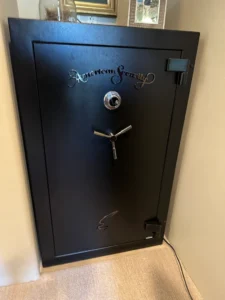
A home safe passes through three entirely different service categories before anyone ever actually uses it. Delivery, moving or relocation, and installation. According to the Associated Locksmiths of America, treating these as one seamless project rather than three disconnected tasks is what separates a smooth experience from a frustrating one. Most homeowners only think about one phase at a time. One is directly in front of them and end up surprised when the next phase doesn’t automatically follow from the last. This guide walks through how all three actually fit together.
Quick answers:
- Delivery gets a safe to your home; moving or relocation gets it from one location to another. Installation anchors it properly in its final spot- three distinct services that don’t automatically include each other.
- The gap between delivery and installation is a real vulnerability window. An unanchored safe is neither fully secure nor fully protecting its contents as designed.
- Most breakdowns in this process happen at the handoff points between phases, not within any single phase itself, when nobody has clearly confirmed who’s responsible for what comes next.
- Phoenix-specific factors, HOA delivery restrictions, desert heat’s long-term effect on anchoring, and the area’s active new-home market touch multiple phases of this process, not just one.
- A single company experienced across all three phases can simplify coordination significantly, though it isn’t the only way to get this done well.
The Three Phases of Getting a Safe From Purchase to Secured in Place
Delivery covers physically getting the safe from a retailer or manufacturer to your home. Sometimes as a basic curbside drop-off and sometimes as a more thorough service that brings it inside. Moving or relocation applies specifically to transporting a safe between two locations, such as a new home or a different room, rather than to delivering it fresh from a purchase.
Installation is the final phase, regardless of how the safe arrived. Properly positioning and anchoring it at its permanent location and confirming that the lock mechanism functions correctly. Each phase has its own equipment, expertise, and considerations, and assuming one automatically includes the others is where most confusion starts.
The Complete Timeline: What Happens When
| Phase | What Happens | Typical Timing |
| Before delivery | Measure doorways and the path to the intended room, confirm which delivery tier was purchased, decide on the installation location | 1-2 weeks before delivery |
| Delivery day | The safe arrives, either curbside or brought inside depending on the service tier purchased | Scheduled delivery date |
| Between delivery and installation | The safe sits in place, ideally not left unanchored longer than necessary | A few days, ideally |
| Installation day | A locksmith anchors the safe, verifies the lock functions correctly, and checks the surrounding area | Scheduled as its own appointment |
| First use | Test the combination or lock and confirm the anchoring feels solid | Same day as installation |
| Ongoing | Periodic checks on anchoring integrity, especially after any renovation or major life event | Every few years, or after a relevant trigger |
Where This Process Commonly Breaks Down
The handoff points between phases, not the phases themselves, are where things most often go wrong. A homeowner assumes that a “white glove” delivery service includes anchoring, only to discover they never actually scheduled installation. A safe sits in its intended room for weeks after delivery because nobody booked a locksmith, leaving it unanchored and vulnerable far longer than necessary. People treat a move between homes as a simple relocation when they have not evaluated the destination for proper installation, floor load, wall type, or anchoring surface, leaving the safe in a spot they never confirmed as suitable.
Phoenix-Specific Considerations That Touch All Three Phases
A few local factors show up across more than one phase of this process. HOA delivery restrictions, common in newer Valley communities, can affect delivery scheduling before a homeowner even thinks about installation. Phoenix’s desert heat and temperature cycling can gradually affect anchor integrity over the years following installation. This is why the “ongoing” phase matters as much as the initial setup. And the area’s active new-home construction market means many homeowners coordinate all three phases at once, right around a move, rather than as separate events spread out over time.
Relocating or installing a heavy gun safe requires specialized equipment, structural assessments, and expert handling to protect your property from costly damage. Avoid personal injury and floor damage by letting the experienced professionals at North Valley Locksmith manage your move—contact us today to arrange seamless, secure safe delivery and bolt-down anchoring in Phoenix.
Frequently Asked Questions
Can the same company handle delivery, moving, and installation, or does it always require multiple providers?
It depends on the specific situation. A locksmith experienced across all three areas can often handle moving and installation together and sometimes coordinate directly with a retailer’s delivery service as well. However, delivery itself, especially for a brand-new purchase, often comes from the retailer or manufacturer rather than the locksmith directly. Asking upfront which parts of the process a specific company covers avoids assuming more coordination than actually exists.
What’s the single most common mistake homeowners make when coordinating all three phases of getting a safe set up?
Assuming one phase automatically includes the next, most often assuming delivery includes installation, or assuming a same-address move doesn’t need the same anchoring attention as a brand-new setup. Confirming explicitly what’s included at each step, rather than assuming based on how the service was marketed, prevents the safe from arriving or being moved but never properly secured in place.
Should I buy my safe from a local Phoenix retailer or order online, and does that affect how delivery and installation get coordinated?
Both options can work, but they affect coordination differently. A local retailer may offer more integrated delivery options and be more familiar with coordinating local installation. At the same time, an online purchase often means delivery arrives through a general freight carrier with less flexibility. It’s more important to arrange installation as a separate, self-scheduled step. Neither option is inherently better, but knowing your situation helps you plan the next steps accurately.
How much should I budget in total for delivery, moving, and installation combined, not just the safe itself?
This varies significantly based on the safe’s size and weight and the specific services involved. How far it needs to travel, but budgeting for all three as separate line items, rather than assuming one price covers everything, avoids an unpleasant surprise partway through the process. Getting itemized quotes for each phase before committing gives a clearer total picture than assuming the safe’s purchase price makes up most of the overall cost.
Is it safe to leave a delivered safe unanchored for a few days before installation, or should that window be minimized?
A few days generally isn’t a significant risk. Minimizing this window is still worth doing. An unanchored safe doesn’t provide the same level of security or fire protection as a properly installed one. Scheduling installation as soon as reasonably possible after delivery, rather than treating it as a task to get to eventually, keeps this vulnerability window as short as practical.
Does financing or purchasing a safe on a payment plan affect how delivery and installation get scheduled?
Not typically in a direct way, though it’s worth confirming with the specific retailer. Some financing arrangements may tie delivery timing to payment milestones. Installation itself, as a separate service from the safe purchase, generally isn’t affected by how the safe was financed and can usually be scheduled independently once delivery has occurred.
What questions should I ask a company before hiring them to make sure they handle all three phases competently?
Ask directly which specific phases they handle themselves versus coordinate with another provider, what equipment they use for the safe’s specific size and weight, whether they verify the intended location before committing to an anchoring plan, and what happens if an issue comes up partway through, like the safe not fitting through a doorway as expected. A company that answers these specifically, rather than with a general assurance that “we handle everything,” is generally the more reliable choice.
If something goes wrong at any point in this process, who is actually responsible: the retailer, the delivery company, or the locksmith?
This depends on which phase the issue occurred in and each party’s specific scope of responsibility, which is why confirming those boundaries clearly before the process starts matters. Damage during delivery is generally the delivery company’s responsibility. At the same time, an anchoring or lock function issue after installation falls to the locksmith who performed that work, and having clear documentation of who did what at each phase makes resolving any issue significantly easier than trying to untangle it after the fact.
See also: Why Luxury Homeowners in Phoenix Trust Professional Safe Installation Services, Safe Delivery for New Homeowners in Phoenix: Everything You Need to Know Before Installation