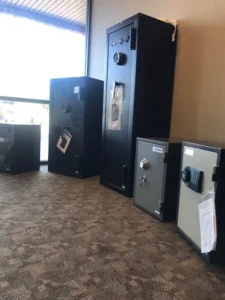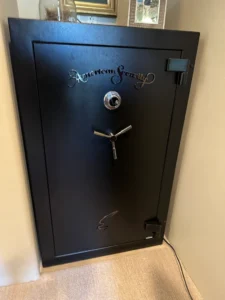

A lot of Phoenix homeowners walk into this decision assuming a safe is a safe, and the only real question is size. It isn’t. Manufacturers design a safe built to protect your passport and grandmother’s jewelry through a house fire for an entirely different purpose. They build a gun safe to let you access a defensive firearm quickly and securely in the middle of the night. Buying the wrong one, or installing the right one in the wrong spot, means paying full price for only half the protection you actually need.
Phoenix adds two wrinkles most safe-buying guides never mention. The vast majority of homes here sit on a concrete slab foundation, which changes how anchoring actually works. Phoenix garages regularly hit temperatures that would concern a safe long before its official fire rating ever becomes relevant.
Two Different Safes Solving Two Different Problems
Manufacturers build a home or document safe mainly for fire resistance. They rate these safes to protect paper hard drives and jewelry during a house fire for a set period of time and at a specific internal temperature. That fire rating is the number that actually matters most when comparing options in this category.
A gun safe is built primarily around burglary resistance and secure, organized firearm storage, often with a second priority layered on top: fast access for a defensive handgun when seconds matter. These are genuinely different engineering problems, and a safe optimized for one doesn’t automatically perform well at the other.
Home Safe vs. Gun Safe: What Actually Differs
| Factor | Home / Document Safe | Gun Safe |
|---|---|---|
| Primary design priority | Fire resistance for paper, media, and jewelry | Burglary resistance and organized firearm storage |
| Typical certification focus | Fire rating, such as one hour at a specified internal temperature | Often rated as an RSC (Residential Security Container); higher-end models carry UL TL-15 or TL-30 burglary ratings |
| Access speed | Not typically built for rapid access | Frequently built for quick access via biometric or keypad entry for a defensive firearm |
| Interior configuration | Adjustable shelving for documents and small valuables | Barrel racks, pistol pockets, ammunition storage, sometimes a separate rapid-access compartment |
| Humidity and rust control | Rarely included as a feature | Often includes a dehumidifier rod, though less critical in Phoenix’s dry climate than in humid regions |
| Anchoring demands | Standard anchor points, moderate overall weight | Often larger and heavier, making proper anchoring even more important given the contents |
What “RSC” Actually Means, and Why It Trips People Up
Many safes sold widely as gun safes only carry a Residential Security Container rating. This category has modest entry level resistance standards. These models do not meet the stricter TL 15 or TL 30 burglary ratings that Underwriters Laboratories tests. That doesn’t make an RSC-rated safe useless. It does mean the marketing term “gun safe” alone tells you almost nothing about actual burglary resistance.
According to guidance published by the National Shooting Sports Foundation through its Project ChildSafe program, secure firearm storage is about more than the safe’s label. It’s about matching the actual security level to the actual risk, which means checking the specific certification rather than trusting the category name on the box.
Fire Ratings Matter More in Phoenix Than the Spec Sheet Suggests
A safe’s fire rating assumes a starting ambient temperature close to normal room conditions, then measures how long the interior stays below a damage threshold during an external fire. A Phoenix garage in July regularly climbs above 120 degrees Fahrenheit. This temperature already far exceeds the level at which sensitive documents backup drives or photographs start to degrade. This damage happens completely apart from any fire situation that the rating was created to handle.
This is a genuinely regional consideration. A safe stored in a garage here starts every summer day meaningfully closer to a heat-damage threshold than the same safe in a climate-controlled interior room, which makes placement a bigger factor in Phoenix than the safe’s rating alone would suggest.
Anchoring on a Slab: Why Phoenix Installations Look Different
Most Phoenix homes are built on a concrete slab foundation rather than a raised wood subfloor. That actually simplifies anchoring in one specific way: there’s no need to locate a floor joist, since the slab itself is the anchor point. Expansion or epoxy anchors driven into solid concrete, sized appropriately for the safe’s weight, are the standard approach almost everywhere in the region.
The tradeoff is that once a safe is anchored into a slab, relocating it later means dealing with old anchor holes and potentially patching concrete. It’s worth thinking through the intended location carefully before installation rather than after.
Should You Get One Safe or Two?
Plenty of households genuinely need both: a fire-rated document safe for irreplaceable paperwork and valuables, and a separate gun safe built around firearm-specific storage and access needs. Combining both purposes into a single gun safe is possible, especially in models with a dedicated fireproof-lined compartment for documents. Still, it’s worth confirming that fire protection is a genuinely engineered feature, not just marketing language, before relying on it.
For many homeowners, the more practical answer is two separate safes in two separate locations: a document safe somewhere climate-controlled and easily accessible, and a properly anchored gun safe positioned for both security and the access speed the household actually needs.
Getting the Placement and Installation Right the First Time
Choosing between these two categories, or deciding you need both, is only half the decision. Where the safe goes and how it’s anchored once it’s there determine whether it actually performs as its rating suggests. Schedule a consultation with North Valley Locksmith to talk through the right safe for your specific needs and get it properly anchored to your home’s actual construction, not just bolted down wherever it happens to fit.
Whether securing firearms or protecting essential documents, home safes and gun safes require distinct anchor methods, weight distribution, and placement strategies. Our Phoenix specialists ensure your safe meets all local safety considerations and is anchored correctly to your home’s foundation. Trust the North Valley Locksmith team for professional, hassle-free installation.
Frequently Asked Questions
Can one safe serve as both a home safe and a gun safe?
Some gun safes include a dedicated fireproof compartment for documents, which can work for households that don’t need extensive separate document storage. The important step is confirming that fire protection is a genuinely engineered and rated feature. Not every gun safe with a “document pocket” actually meets a recognized fire-rating standard. For households with significant paperwork, jewelry, or media to protect, a separate dedicated document safe usually provides more reliable fire protection. The right answer depends on how much of each type of item you actually need to store securely.
Does Phoenix’s climate affect where I should install my safe?
Yes, more than most safe buyers expect. Phoenix garages regularly exceed temperatures that can damage sensitive documents, photographs, and electronics well before any fire ever starts. A safe’s fire rating assumes a much cooler starting point than a 120-degree garage provides. A climate-controlled interior location protects the safe’s contents and provides a more realistic starting baseline for its fire rating if a fire were to occur. This is a genuinely regional consideration that a generic national buying guide typically won’t mention.
What’s the difference between an RSC-rated and a TL-rated gun safe?
RSC, or Residential Security Container, is an entry-level certification with modest burglary-resistance standards. At the same time, TL-15 and TL-30 ratings from Underwriters Laboratories reflect significantly more rigorous testing against specific tools over a defined period. Many safes marketed simply as “gun safes” are only RSC-rated, which doesn’t make them worthless, but it does mean the marketing category alone doesn’t tell you much about the actual security level. Checking the specific certification, rather than trusting the product category name, is the only reliable way to know what you’re actually getting. Higher security needs generally call for a TL-rated safe rather than an RSC-rated one.
Should a gun safe be anchored differently than a home safe?
The anchoring principles are the same: secure the safe to solid structural material using the manufacturer’s specified anchor points. But gun safes are often larger and heavier, which makes getting it right even more important. In most Phoenix homes, this means anchoring into a concrete slab with appropriately sized expansion or epoxy anchors. Given that gun safes typically store both valuable and safety-sensitive contents, skipping proper anchoring undermines the safe’s entire security purpose more significantly than it would for a smaller document safe. Professional installation helps confirm the anchoring method matches both the safe’s weight and the specific slab or subfloor involved.
Is a garage a good place to store a safe in Phoenix?
It can work for a gun safe where fire protection isn’t the primary concern. It’s a riskier choice for a document safe where heat-sensitive contents like paper, photographs, or electronics are involved. Phoenix garage temperatures in summer regularly exceed levels that can degrade sensitive materials long before any fire scenario, which works against the entire purpose of a fire-rated safe. A climate-controlled interior closet or room generally provides better protection for temperature-sensitive contents. If a garage location is the only practical option, choosing a safe and contents accordingly is worth discussing during installation.
How do I decide what size gun safe I need?
Start with your current firearm collection, then add meaningful room for growth. Undersizing is one of the most common regrets gun safe buyers have once they’ve owned one for a year or two. Consider what else needs to fit alongside firearms: ammunition, optics, documents, or other valuables you’d like consolidated into one secure location. Interior configuration matters as much as raw capacity, since barrel racks, shelving, and a dedicated quick-access compartment all affect how usable the space actually is. A professional installer can help match safe size and configuration to both your current needs and your home’s actual available space.
See also: Why Gun Safe Moving Should Always Be Left to Professionals in Phoenix, How to Prepare Your Home for Safe Delivery and Installation in Phoenix