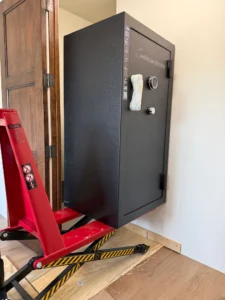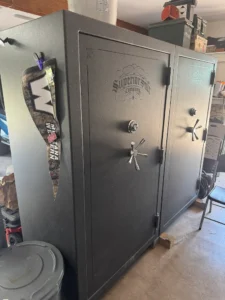
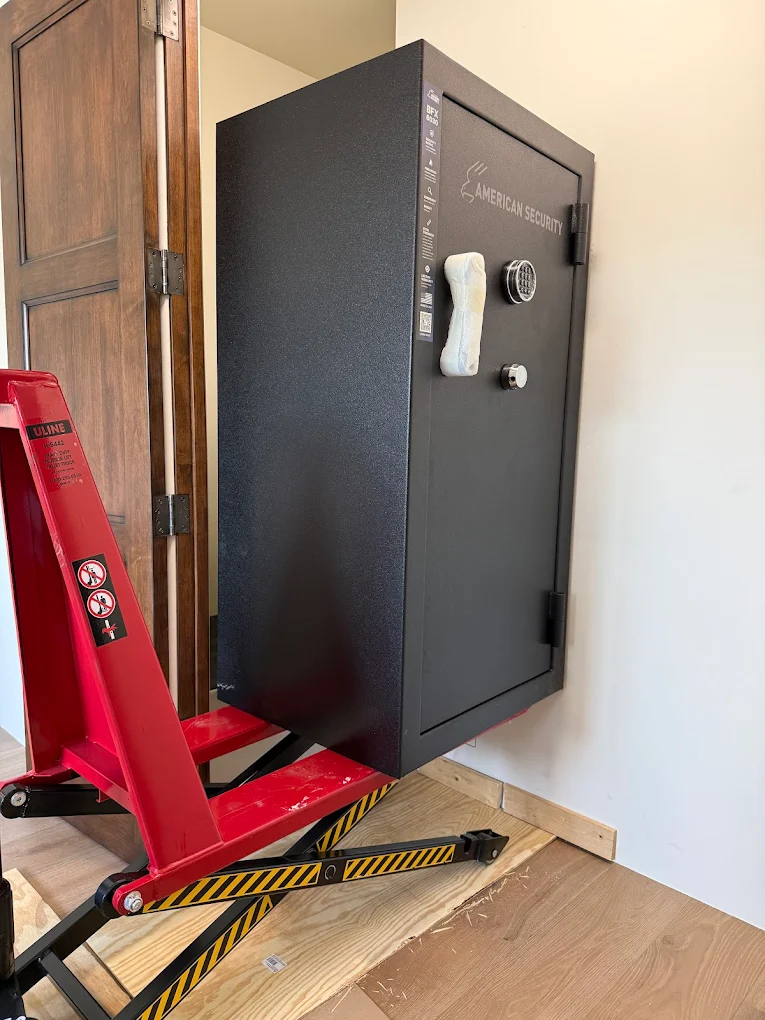
A three-hundred-pound safe sounds like the end of the conversation. It isn’t. To a burglar with a furniture dolly and thirty seconds of privacy a heavy safe that no one anchors to anything is just a heavy box. They wheel it out to a waiting vehicle and open it somewhere far more convenient. They work at their own pace without time pressure and without any witnesses.
That’s the uncomfortable reality most safe owners never think through. A safe’s weight and burglary rating both assume the safe stays exactly where installers place it. Bolting it down is the step that actually guarantees that assumption holds. Yet people routinely skip this very step entirely. They often skip it because delivery services did not include the work. Sellers never explained that it is anything more than optional.
Most Stolen Safes Aren’t Cracked, They’re Removed
Professional burglars rarely attempt to defeat a quality safe on-site. This method requires tools time and noise. All of these factors raise the chance that someone will catch you. It is much quicker and quieter to load the whole unit onto an appliance dolly. You can then take it to a private location. There you can work on the safe without any time pressure.
This is precisely why an unanchored safe undermines its own purpose.A safe rated to stand up to one hour of tool attack offers no real protection if someone carries it out the door in less than a minute. The rating never even gets a chance to matter.
What “Bolting Down” Actually Means
Anchoring a safe means securing it directly to the structural surface beneath or behind it. Typically a concrete slab, a wood subfloor tied into the framing, or in some installations, a wall stud. It uses the anchor points most safe manufacturers pre-drill into the base specifically for this purpose. The anchor bolts used matter as much as the act of bolting itself. Concrete generally calls for expansion or epoxy anchors rated for the safe’s weight. A wood subfloor requires lag bolts driven into a joist, not just the subfloor sheathing, which alone won’t hold under real force.
A safe that someone bolts only through its outer shell into thin plywood does not provide real security. It’s a heavy object with a screw in it,. A determined effort with a pry bar can separate the two faster than most owners would expect.
What a UL Rating Covers, and What It Doesn’t
Testing organizations like Underwriters Laboratories rate safes based on their resistance to specific tools and attack methods over a defined period. Ratings like TL-15 or TL-30 refer to the number of minutes a safe resisted a tool attack under laboratory conditions. That rating is a meaningful, independently verified measure of the safe’s construction quality.
It says nothing about what happens if the safe simply isn’t there anymore. A TL-30 rated safe that gets loaded into a truck and driven away provides its owner with exactly zero of the protection that rating implies, since the entire test assumes the safe remains in place while under attack. Anchoring is what makes a burglary rating actually mean something in a real break-in, not just in a lab.
Insurance Considerations Worth Understanding Before You Assume Coverage
Many homeowners’ and business insurance policies apply specific sublimits, and sometimes specific conditions, to coverage for cash, jewelry, firearms, and other high-value items typically stored in a safe. According to general guidance from the Insurance Information Institute, insurers frequently expect reasonable security measures for high-value contents. Some policies condition full contents coverage on the safe meeting specific security standards.
Whether anchoring specifically affects your coverage depends entirely on your policy’s actual language, which varies by insurer and by policy. Reviewing your policy directly, or asking your agent specifically whether safe anchoring affects a claim involving its contents, is worth doing before assuming either way.
Anchored vs. Unanchored: What Actually Changes
| Factor | Anchored (Bolted Down) Safe | Unanchored Safe |
|---|---|---|
| Removal risk | Requires defeating the anchor itself, in addition to the safe | Can often be carried or wheeled out whole in under a minute |
| Tools a burglar needs | Tools capable of defeating both the safe and its anchor | A furniture dolly, hand truck, or an extra set of hands |
| Burglary rating relevance | The rating reflects real protection, since the safe stays in place during an attack | The rating may be irrelevant if the safe is simply removed intact |
| Insurance considerations | May help satisfy an insurer’s security requirements for high-value contents | May reduce or complicate a contents claim, depending on specific policy language |
| Cost to implement | Typically a few hundred dollars in hardware and labor, often at time of delivery | No added cost, but materially higher risk |
Firearm Storage and Why Anchoring Matters There Specifically
Many jurisdictions regulate how firearms must be stored, particularly around children in the home, and some laws specify requirements for a “secure” storage device. California, for example, maintains a Department of Justice list of approved firearm safety devices with specific construction standards. Requirements like these vary significantly by state and locality, so confirming your specific jurisdiction’s rules is essential rather than assuming a general standard applies everywhere.
Even where anchoring isn’t explicitly mandated by statute, a safe that can be easily carried away defeats the purpose of secure firearm storage requirements, regardless of whether the specific law addresses anchoring directly. A safe that stays exactly where it was installed is functionally a very different security device than one that doesn’t.
How to Actually Bolt Down a Safe
Identify the surface beneath the safe’s intended location first: solid concrete slab, a wood subfloor over a joist, or in rare cases a load-bearing wall. Use the manufacturer’s specified anchor points and hardware rather than improvising with generic hardware-store bolts, since manufacturers typically engineer these points to withstand specific pry and shear forces.
For concrete, this generally means expansion or epoxy anchors driven deep enough to engage solid material, not just the surface layer. For wood subfloors, lag bolts need to reach into an actual floor joist, confirmed with a stud finder or from below if there’s crawl space access, since a bolt through subfloor sheathing alone provides very little real holding strength.
Common Mistakes That Undermine the Whole Point
Using only one or two of the safe’s available anchor points, when more are provided, meaningfully reduces resistance to a pry attack aimed at the unsecured corners. Anchoring into drywall or subfloor without hitting a stud or joist behind it is functionally close to not anchoring at all, since the material itself can’t bear real force.
Placing a safe on an upper floor without confirming the framing can support both the safe’s weight and the anchoring method is another common oversight, one that sometimes requires a different anchoring approach entirely or professional evaluation of the specific structure involved.
Get It Installed Correctly the First Time
Anchoring hardware is inexpensive. Getting it wrong, using the wrong anchor type for the surface, missing available mounting points, or anchoring into material that can’t hold, defeats the purpose just as thoroughly as skipping it altogether. Schedule a professional safe installation with North Valley Locksmith to ensure your safe is anchored securely to the surface it’s sitting on, not just bolted to something convenient.
A note on sourcing: this article does not include customer testimonials or local burglary statistics specific to your service area, since I don’t have access to real customer accounts or verified regional crime data, and inventing either would misrepresent both actual customer experiences and the facts on the ground. Real customer testimonials, gathered with consent, and regional data from local police department reports would meaningfully strengthen this piece and should be added directly by North Valley Locksmith.
Even the heaviest safe is vulnerable to removal if it isn’t anchored correctly. Bolting down your safe prevents thieves from carting it off and eliminates tipping hazards. Trust the North Valley Locksmith team to anchor your safe securely to concrete or floor joists for uncompromised protection.
Frequently Asked Questions
Can a heavy safe still be stolen if it’s not bolted down?
Yes, and this is one of the most common misconceptions safe owners have. Burglars frequently use furniture dollies, hand trucks, or simply enough manpower to carry an unanchored safe out of a home or business intact, then attack it later somewhere private and without time pressure. Weight alone slows this down somewhat but doesn’t prevent it, especially for safes under a few hundred pounds. Anchoring is what actually prevents removal, regardless of how much the safe weighs on its own.
What’s the best way to anchor a safe to a concrete floor?
Expansion or epoxy anchors rated for the safe’s weight, driven through the manufacturer’s pre-drilled anchor points into solid concrete, are the standard approach. The anchors need to engage solid material at sufficient depth, not just the surface layer of the slab, to provide real holding strength against a pry attack. Using the safe manufacturer-specified hardware, rather than generic hardware store bolts, matters because manufacturers typically engineer these anchor points for a specific load. A professional installer can confirm the slab’s condition and select the appropriate anchor type for your specific safe and floor.
Does anchoring a safe affect my insurance coverage?
It can, depending entirely on your specific policy language, since insurers vary in how they handle security requirements for high-value items like cash, jewelry, or firearms. Some policies require full contents coverage to be contingent on reasonable security measures being in place, which may include an anchored safe, while others don’t address this specifically at all. Reviewing your actual policy or asking your insurance agent directly is the only reliable way to know how this applies to your situation. This is worth confirming before an incident occurs, not after a claim has already been filed.
Do gun safes need to be bolted down to meet firearm storage laws?
This depends heavily on your specific state and local jurisdiction, since firearm storage requirements vary significantly across the country and not every law explicitly addresses anchoring. Some states maintain approved device lists with specific construction standards, while others have more general secure storage requirements. Even where anchoring isn’t explicitly required by statute, a safe that can be easily carried away undermines the practical purpose of most firearm storage laws. Confirming your specific jurisdiction’s requirements, rather than assuming a general standard applies, is the responsible approach.
Can I bolt down a safe myself, or should I hire a professional?
It’s possible to do it yourself if you can correctly identify the surface beneath the safe, confirm you’re anchoring into solid material, such as concrete or a floor joist, and use the correct hardware for that surface. Many people get this wrong in ways that aren’t obvious until the anchor fails under real force, such as missing the joist entirely or using undersized hardware. A professional installer brings the tools and experience to confirm the substrate and select the right anchoring method the first time. Given how inexpensive proper anchoring is relative to the value typically stored in a safe, professional installation is generally a reasonable investment.
What does a UL security rating actually tell you about a safe?
A UL rating like TL-15 or TL-30 indicates how long the safe resisted specific tools and attack methods under controlled laboratory testing, which is a genuine and independently verified measure of the safe’s construction quality. It says nothing about what happens if the safe is simply removed from the premises intact, since the entire test assumes the safe stays in place during the attack. A highly rated, unanchored safe provides essentially no real-world protection beyond what its rating implies. Anchoring is what allows a safe’s burglary rating to actually apply in a real break-in scenario.
See also: Moving to a New Home? Relocate Your Safe Properly, What to Expect During a Professional Safe Delivery and Installation Service