
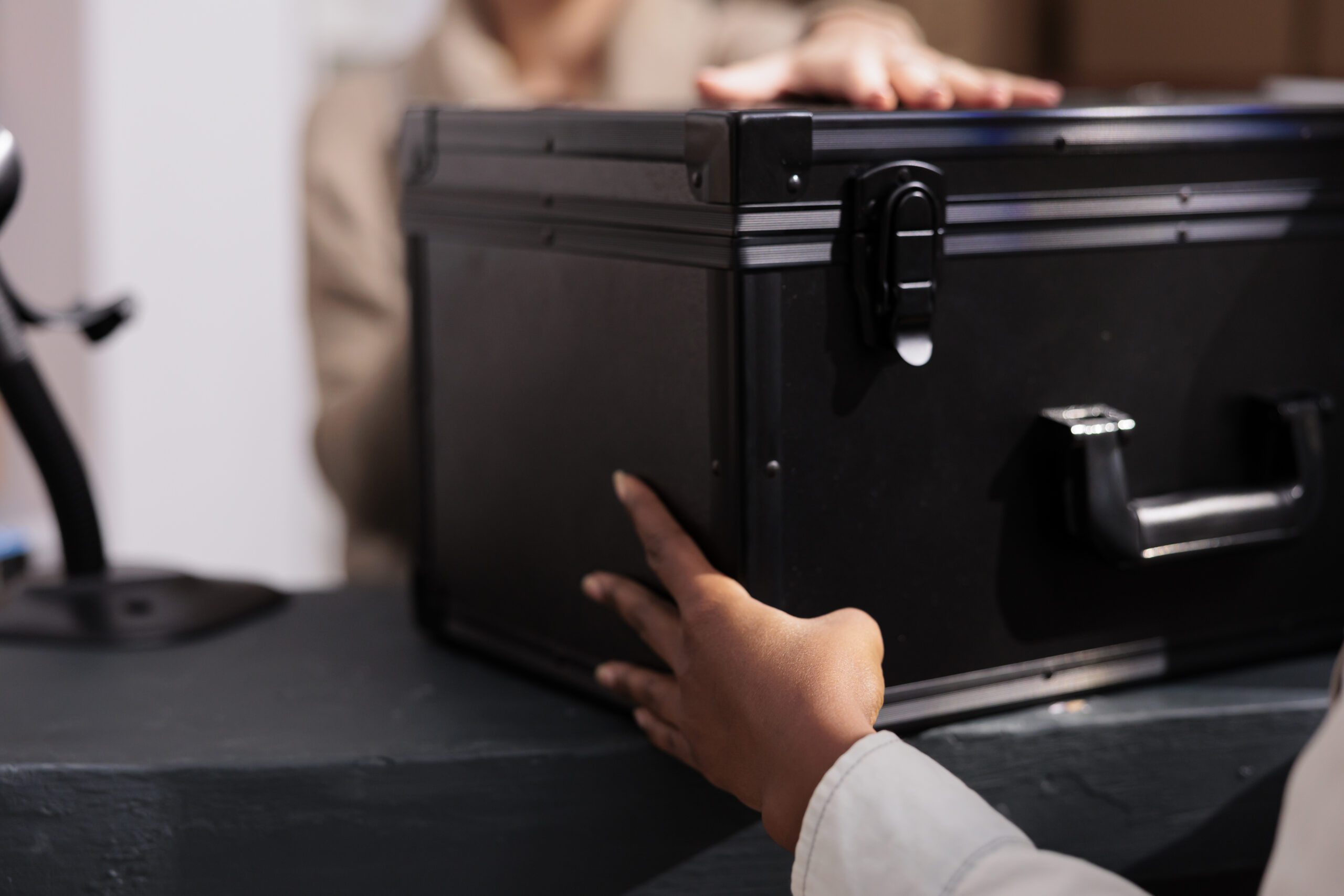
In Maricopa County, a residential burglary occurs every 47 minutes on average — and firearms rank among the most commonly stolen items in home break-ins, according to the FBI’s 2025 Crime Data Explorer. The typical residential burglary lasts 8–12 minutes. That is exactly how long it takes to walk away with an unsecured gun cabinet, an untethered safe, or any firearm stored in a drawer. Most Scottsdale homeowners who own firearms believe they are protected. Many are not. This guide covers every gun safe security solution available for Scottsdale homes—from security ratings and fire protection to professional anchoring and Arizona-specific storage considerations most guides miss entirely. Written by the team at North Valley Locksmith, a licensed and insured locksmith serving Scottsdale, Paradise Valley, and the North Valley.
TL;DR — What Scottsdale gun owners need to know:
- A UL RSC-rated gun safe is the minimum security standard worth purchasing; anything below that offers minimal resistance to a determined burglar.
- Anchoring your safe to the floor or wall matters as much as the safe’s rating—unbolted safes walk out the door in minutes.
- Scottsdale’s extreme summer heat makes garage storage risky for electronics, ammunition, and gun finishes; interior placement is always the better choice.
- Arizona does not mandate firearm storage in a safe, but an unsecured firearm stolen from your home can create significant civil liability.
- North Valley Locksmith installs, anchors, and services gun safes throughout Scottsdale and the surrounding North Valley.
Why Gun Safe Security Matters More in Scottsdale Than You Think
Scottsdale’s reputation as one of Arizona’s safest cities is real but incomplete. The city’s residential burglary rate has remained above the national median in recent years, and Maricopa County as a whole reported over 14,000 residential burglaries in 2024, according to Scottsdale Police Department crime statistics. Firearms are a high-value, portable target in every residential break-in.
Maricopa County burglary rates and stolen firearms data
The FBI’s 2025 Crime Data Explorer reports that firearms were stolen in approximately 1 out of every 4 residential burglaries nationwide in 2024. Applied to Maricopa County’s burglary count, that translates to an estimated 3,500+ firearms stolen from homes in the county in a single year. The majority of those firearms were not secured in a rated safe. They were in cabinets, in closets, or in safes that were not anchored to the structure.
What burglars actually take — and how fast they work
The average residential burglary in the U.S. lasts 8–12 minutes, according to the FBI Uniform Crime Reporting methodology. During that window, a burglar prioritizes small, high-value items: cash, jewelry, electronics, and firearms. A 200-lb gun cabinet secured with a wafer lock can be opened with a screwdriver in under 60 seconds. A 400-lb but unbolted, RSC-rated safe can be tipped, rolled into a vehicle, and broken into at leisure elsewhere. The combination of a rated safe AND proper anchoring is what closes that window.
Gun Safe vs. Gun Cabinet: Understanding the Security Gap
“Gun safe” and “gun cabinet” are used interchangeably in casual conversation. In security terms, they describe products with fundamentally different levels of protection.
A gun cabinet is typically constructed from 16–20 gauge sheet steel with glass display panels, wafer locks, and no meaningful pry resistance. Its purpose is to deter casual access by children and display firearms attractively. It is not designed to resist a determined adult with basic tools.
A gun safe is a steel-walled, lockable enclosure built to resist forced entry for a measurable period. True gun safes use 10–12 gauge steel (or thicker), hardened steel plates protecting the locking mechanism, and either UL-certified or ETL-verified locks.
Gun Safe vs. Gun Cabinet vs. Quick-Access Vault
| Feature | Gun Cabinet | Quick-Access Vault | UL RSC Gun Safe |
|---|---|---|---|
| Typical steel gauge | 16–20 gauge | 14–16 gauge | 10–12 gauge (or better) |
| Security rating | None | None | UL RSC or higher |
| Pry resistance | Minimal | Low–Moderate | High |
| Fire protection | None | None | Optional (rated models) |
| Floor/wall anchoring | Limited | Wall-mount | Full bolt-down |
| Forced entry time | Under 1 min | 1–3 min | 5–20+ min (RSC rated) |
| Typical price range | $100–$400 | $150–$600 | $500–$5,000+ |
| Best for | Child deterrence | Bedside access | Primary home security |
The gap between a gun cabinet and a UL RSC safe is not a matter of degree. It is a category difference. No cabinet marketed as a “gun safe” without a UL RSC or equivalent certification should be trusted with primary firearm security in a Scottsdale home—particularly in neighborhoods where home values and contents make residential burglary a calculated choice.
Gun Safe Security Ratings Explained: UL RSC, ETL, and California DOJ
Security ratings are the most misunderstood aspect of gun safe shopping. Manufacturers market gauge thickness, weight, and lock complexity without context. The certification marks are what actually tell you what was tested and how.
What UL RSC certification means (and what it tests)
The Underwriters Laboratories Residential Security Container (UL RSC) standard requires that a safe resist a determined attack using standard tools—including pry bars, punches, chisels, and hammers—for 5 minutes of net working time. A team of two UL-trained testers attempts to open the safe via the door or body. If neither attack point is breached in the allotted time, the safe earns the RSC listing. According to Underwriters Laboratories, RSC-listed safes must also be tested for re-locking mechanisms (relockers) that trigger if the primary lock is attacked.
ETL-verified safes: same standard, different testing lab
ETL (now Intertek) applies the same RSC protocol under a different laboratory name. An ETL-verified gun safe meets identical standards to a UL-RSC safe. Both marks are acceptable for Scottsdale homeowners evaluating burglary resistance.
California DOJ approval: what it means for non-California buyers
California DOJ-approved gun safes meet a state-specific standard for both burglary resistance and firearm storage. The CA DOJ list is a useful shortcut for buyers who want a vetted product list, even outside California. Many CA DOJ-approved safes also carry UL RSC certification.
TL-15 and TL-30: when you need more than RSC
TL-15 and TL-30 ratings (also from UL) indicate safes that resist tool attack for 15 and 30 minutes of net working time, respectively. These are commercial-grade ratings. For most residential gun storage in Scottsdale, UL RSC is the practical standard. TL-rated safes are appropriate for homeowners with extensive firearm collections or high-value contents beyond firearms.
“The UL RSC mark is the floor, not the ceiling. Most homeowners ask me about weight and gauge, which matters—but a 600-pound safe without a UL RSC mark has never been independently tested for what actually counts: whether a trained person with standard tools can get inside. Always buy the rating, not the specs.” — Mark Bramlett, CPL, ALOA Certified Professional Locksmith (ALOA, 2025)
Fire Ratings for Gun Safes: What Scottsdale Homeowners Should Know
A gun safe that withstands a burglar but burns open in a house fire has failed half its job. Fire ratings on gun safes are governed by the UL 72 standard, which tests how well the interior of a safe maintains a safe temperature when the exterior is exposed to fire.
The relevant temperature thresholds are the following:
- Paper ignites at 451°F (233°C) — the target for document safes
- Ammunition cooks off (varies by type) at 320–400°F—a lower effective threshold for gun storage
- Digital media and USB drives degrade above 125°F—if you store digital backups inside a gun safe
A UL 72 Class 350 rating for 1 hour means the interior temperature remained below 350°F during 60 minutes of sustained external fire. For safe storage of firearms and paper documents (registration and insurance records), a 1-hour, 350°F rating is the practical minimum for Scottsdale. A 2-hour rating provides a meaningful added safety margin.
The National Fire Protection Association notes that the average residential structure fire lasts approximately 30 minutes before suppression. A 1-hour rated safe with sufficient interior volume provides meaningful protection against the majority of residential fire scenarios in Scottsdale’s single-family home market.
How to Properly Anchor a Gun Safe: The Step Most Homeowners Skip
A high-quality gun safe that is not bolted down is a portable vault. Burglars who cannot breach a safe at the scene will take the safe with them — a tactic documented in dozens of Maricopa County residential burglary reports. Weight does not protect against removal; anchoring does.
Concrete slab anchoring (the Scottsdale standard)
Most Scottsdale homes are built on concrete slab foundations, which makes concrete anchoring the most common and most secure method. The process involves drilling anchor holes in the safe’s pre-drilled floor plate, drilling corresponding holes in the concrete, setting concrete anchor bolts (3/8-inch or 1/2-inch diameter minimum, 3-inch minimum embedment), and torquing to manufacturer specifications. When done correctly, a concrete-anchored safe requires specialized demolition equipment to remove, which no residential burglar carries.
Wood subfloor anchoring: lag bolt requirements
For homes with wood subfloor construction, anchoring requires lag bolts long enough to penetrate the subfloor and engage at least one floor joist. Short lags that seat only in subfloor sheeting provide minimal resistance. A minimum of 3/8-inch lag bolts at 3-inch engagement into the joist are the professional standard. A North Valley Locksmith technician verifies joist location and load-bearing capacity before anchoring.
Wall anchoring for smaller safes and quick-access vaults
Bedside handgun vaults and smaller quick-access safes are often mounted to wall studs rather than floor-anchored. Stud location, fastener size, and drywall versus masonry wall construction all affect whether the mount holds under stress. Drywall-only mounts are not adequate for any safe larger than a single-handgun vault.
Why a 600-lb safe still needs to be bolted down
A 600-lb safe presents a serious challenge for a lone burglar — but residential burglaries frequently involve two or more perpetrators, and dollies are cheap. In documented cases from Maricopa County theft investigations, safes weighing over 400 lbs were removed from homes using basic moving equipment. Anchoring eliminates the removal option entirely.
Gun Safe Storage in Arizona’s Heat: What You Need to Know
No national gun-safety guide covers this, and it matters to every Scottsdale homeowner considering garage storage. Summer temperatures in Scottsdale garages routinely reach 130–150°F between June and September. That sustained heat creates specific problems for gun safes and their contents:
Electronic locks: Most electronic keypad and biometric locks operate within a rated temperature range of -4°F to 122°F. Garage temperatures in Scottsdale regularly exceed 122°F during peak summer, which can cause lock malfunctions, battery degradation, and in some cases, complete electronic failure. Dial combination locks are the only lock type unaffected by extreme heat.
Ammunition: Sustained heat above 120°F degrades ammunition primers over time. While a single hot day will not ruin a round, ammunition stored in a 140°F garage through multiple Phoenix-area summers loses reliability. Interior storage at ambient household temperature is the correct choice for ammunition longevity.
Gun finishes and lubricants: Extreme heat dries out lubricants, causes stock wood to check and crack, and accelerates oxidation under protective coatings. Firearms stored in a climate-controlled interior room outlast those kept in a hot garage—independent of whether they’re in a safe.
The practical answer for Scottsdale: Place your gun safe inside the home, in a climate-controlled space. The master closet, a dedicated safe room, or a finished utility room all outperform the garage. If garage installation is the only option during the monsoon season.
Arizona’s climate is arid—relative humidity is low—but monsoon season (July through September) introduces humidity spikes that promote corrosion inside safes without active moisture control. A GoldenRod or Eva-Dry dehumidifier rod prevents this entirely and costs under $30.
The North Valley Gun Safe Security Scorecard
Most gun safe purchases are driven by price and appearance. The six variables below are what actually determine whether a safe protects your firearms or just contains them.
1. Security Rating
- No rating: Score 0. Replace or supplement immediately.
- ETL-verified / CA DOJ approved: Score 2. Adequate for basic residential use.
- UL RSC listed: Score 3. Minimum recommended standard for Scottsdale homes.
- UL TL-15 or higher: Score 5. Commercial-grade residential protection.
2. Fire Rating
- No fire rating: Score 0.
- 30-minute / 1,200°F exterior: Score 1.
- 1-hour / UL 72 Class 350: Score 3. Minimum recommended for Scottsdale.
- 2-hour / UL 72 Class 350: Score 5. Best for high-value collections.
3. Anchoring Method
- Not anchored: Score 0. A critical gap regardless of other ratings.
- Wall-mounted to studs: Score 2.
- Lag-bolted to wood subfloor with joist engagement: Score 3.
- Concrete-anchored with expansion bolts: Score 5. Standard for AZ slab construction.
4. Lock Type
- Key lock only: Score 1.
- Single electronic keypad: Score 2.
- Biometric only: Score 2.
- Dial combination: Score 3.
- Redundant system (keypad + key or dial): Score 5.
5. Steel Gauge and Pry Resistance
- 18–20 gauge body: Score 1.
- 14–16 gauge body: Score 2.
- 10–12 gauge body with anti-pry door features: Score 4.
- 10-gauge or thicker with hardened steel plate protecting lock: Score 5.
6. Placement
- Garage or outbuilding: Score 1 (heat, humidity, accessibility risk).
- Visible room, not bolted: Score 1.
- Interior room, bolted, not visible from entry: Score 4.
- Dedicated safe room or concealed installation: Score 5.
Want North Valley Locksmith to run this assessment on your current safe? We offer gun safe security evaluations throughout Scottsdale and the North Valley. Schedule your consultation today.
Arizona Gun Storage Laws: What Scottsdale Homeowners Must Know
Arizona does not mandate safe storage of firearms for adults. Under Arizona Revised Statutes Title 13 (Criminal Code), there is no state law requiring homeowners to store firearms in a locked safe. Arizona is a permissive state on firearm ownership and storage.
That said, three legal frameworks create real-world liability for Scottsdale homeowners who store firearms unsecured:
Civil liability for stolen firearms. If a firearm stolen from your home is used in a crime, you face potential civil liability in Arizona — particularly if the theft resulted from what a court determines was negligent storage. While Arizona does not impose criminal penalties for unsecured storage in most scenarios, civil suits are documented.
Child access prevention considerations. Arizona law (ARS §13-3111) addresses situations where a child accesses an unsecured firearm and causes harm. While not a strict liability statute, evidence of negligent storage in a home with children creates substantial legal exposure.
Federal requirements for FFLs do not apply to private homeowners. Federal law requires licensed dealers to secure firearms when their premises are closed. Private homeowners have no equivalent federal mandate. Arizona law tracks this position. The obligation to secure firearms is ethical and practical — not statutory — for most Scottsdale residents.
“Every week, we process theft reports involving firearms that were stored in unlocked vehicles, unsecured gun cabinets, or unbolted safes. These firearms become community safety problems. Safe storage is not a legal requirement in most cases—but the consequences of an unsecured stolen firearm extend far beyond the homeowner.” — Maricopa County Sheriff’s Office, Residential Safety Division public statement (MCSO, 2025)
Choosing the Right Gun Safe for Your Scottsdale Home
Security ratings, fire ratings, and anchoring methods matter more than brand name. Within those parameters, the right safe depends on your collection size, your home’s construction, and how quickly you need to access firearms in an emergency.
Long gun safes vs. handgun safes vs. combination safes
Long gun safes (rifle safes) are tall, narrow, and designed for rifles and shotguns with handgun storage in a separate compartment. Handgun safes are compact quick-access units for bedside or in-drawer installation. Combination safes provide long gun storage, interior handgun shelving, and document storage in a single cabinet. Most Scottsdale homeowners with mixed collections use a combination safe or pair a full-size combination safe with a bedside quick-access unit for the handgun they want accessible at night.
Biometric vs. dial vs. electronic keypad: Which lock type is most secure?
Lock Type Comparison for Gun Safes
| Lock Type | Access Speed | Reliability | Failure Risk | Best Use Case |
|---|---|---|---|---|
| Dial combination | 30–60 sec | Excellent (mechanical) | Extremely low | Primary lock; no battery |
| Electronic keypad | 3–5 sec | Good | Battery failure risk | Everyday primary access |
| Biometric fingerprint | 1–2 sec | Moderate | Sweat/dirt affects reads | Bedside quick-access safe |
| Key lock | 10–20 sec | Good | Key loss/copying risk | Backup only |
| Redundant (keypad + key) | 3–5 sec | Excellent | Low | Recommended primary |
Biometric locks are popular for their speed but carry the highest false-rejection rate — the rate at which they fail to recognize an enrolled fingerprint. In an emergency, a 15% false-rejection rate is a serious problem. For primary safes, a redundant system (electronic keypad plus a backup key) provides speed with a failsafe. For bedside quick-access units, biometrics are acceptable because the stakes of a false rejection are lower—you still have the combination as backup.
How many guns and how much gear should you plan for?
The standard rule: buy a safe 25–40% larger than your current collection requires. Firearms, accessories, ammunition, cleaning supplies, and documents fill available space faster than most owners anticipate. A safe that feels spacious on delivery will feel crowded within two years of normal ownership.
Weight considerations for Arizona slab construction
Concrete slab construction — the Scottsdale standard — handles weight well. A 700-lb gun safe on a properly anchored concrete anchor system is structurally appropriate for standard residential slab construction. Homes with elevated wood-frame subfloors require joist location verification before placing safes above approximately 400 lbs. North Valley Locksmith verifies structural load capacity during every installation.
Professional Gun Safe Installation in Scottsdale: What North Valley Locksmith Does
Buying a quality gun safe is the first half of the security equation. Professional installation is the second, and it is where many Scottsdale homeowners’ security plans fall short.
What a professional, safe installation includes
North Valley Locksmith’s gun safe installation service covers:
- Site assessment: floor construction type, joist location (where applicable), optimal placement for access and concealment
- Delivery coordination and final placement
- Concrete or wood-subfloor anchoring with hardware appropriate to the installation site
- Lock combination programming and backup key documentation
- Testing of all access points before technician departure
- Customer walkthrough: how to use, maintain, and service the safe
Delivery, placement, and anchoring: the full process
Professional gun safe delivery is not the same as furniture delivery. Safes require specialized dollies, stair-rated equipment for multi-story homes, and careful placement planning before the safe arrives at the final location. North Valley Locksmith coordinates delivery logistics and manages placement to the installation site. Moving a safe after anchoring requires professional equipment—positioning it correctly the first time is always easier.
Safe opening, combination changes, and repair services
North Valley Locksmith provides gun safe opening services when combinations are forgotten, batteries fail, or lock mechanisms malfunction. We also perform combination changes for owners of pre-owned safes—a step that every buyer of a used gun safe should take before placing anything of value inside. All work is performed by licensed technicians with documented credentials.
Gun safe security for your Scottsdale home starts with the right installation.
North Valley Locksmith serves Scottsdale, Paradise Valley, Fountain Hills, Cave Creek, and the broader North Valley. Contact us for a free gun safe security consultation and installation quote.
Frequently Asked Questions
What is the minimum security rating I should look for in a gun safe?
A UL RSC (Residential Security Container) listing is the minimum security rating worth purchasing for a Scottsdale home. RSC-listed safes have been independently tested to resist a forced entry attack using standard tools for at least 5 minutes of net working time. Safes sold without this or an equivalent ETL-verified mark have not been independently tested for burglary resistance.
Should my gun safe be bolted to the floor?
Yes. Anchoring is as important as the safe’s security rating. An unbolted safe — regardless of weight — can be removed by two people with basic moving equipment. Scottsdale homes built on concrete slabs should use concrete anchor bolts. Homes with wood subfloors require lag bolts properly engaged into floor joists. North Valley Locksmith handles anchoring for both construction types throughout Scottsdale.
Is it safe to store a gun safe in a Scottsdale garage?
Garage storage is not recommended in Scottsdale. Summer garage temperatures regularly exceed 130°F, which can damage electronic lock components (rated to 122°F), degrade ammunition primers over multiple seasons, and dry out gun finishes and lubricants. If garage storage is unavoidable, use a dial combination lock, verify the safe’s temperature rating explicitly, and add a dehumidifier rod for monsoon season humidity control.
What fire rating should a gun safe have?
For Scottsdale homeowners storing firearms and paper documents, a UL 72 Class 350 rating for at least 1 hour is the practical minimum. This means the safe’s interior stayed below 350°F for 60 minutes of sustained external fire. Ammunition begins to degrade at lower temperatures (around 320–400°F depending on type), so a 350°F interior threshold provides meaningful but not unlimited protection. A 2-hour rating adds a significant safety margin for larger collections.
How do burglars get into gun safes?
The most common methods are prying the door frame, punching or drilling the lock, removing the safe entirely for off-site attack, and cutting with angle grinders on lower-gauge steel bodies. UL RSC-rated safes are tested against prying and punching attacks. Anchoring eliminates the removal option. Thicker steel (10–12 gauge) significantly raises the time and tool requirement for angle grinder attacks. No consumer safe is impenetrable given unlimited time and tools—the goal is to exceed the burglar’s time window.
Does Arizona require guns to be stored in a safe?
No. Arizona does not mandate safe storage of firearms for private homeowners. However, civil liability exposure exists if an unsecured firearm is stolen from your home and used in a subsequent crime. Arizona’s child access prevention statutes create additional liability if a child accesses an unsecured firearm and causes harm. Safe storage is the responsible and legally protective choice, even without a statutory mandate.
What is the difference between a biometric and electronic keypad gun safe?
A biometric lock reads a stored fingerprint for access and is the fastest lock type (1–2 seconds) but has the highest false-rejection rate among lock types. An electronic keypad requires a PIN entry (3–5 seconds) and is more reliable but depends on battery power. For bedside quick-access safes, biometrics are acceptable. For primary home safes, a redundant system (keypad plus backup key) is the recommended standard.
How much does professional gun safe installation cost in Scottsdale?
Gun safe installation costs in Scottsdale vary by safe size, weight, floor construction type, and anchoring complexity. Basic installation (delivery coordination, placement, and concrete anchoring for a standard residential safe) typically ranges from $150–$350. Installations involving stairs, difficult placement, or wood subfloor with joist location required run higher. North Valley Locksmith provides exact quotes during consultations. The installation cost is a small fraction of the safe’s value and the value of what it protects.


