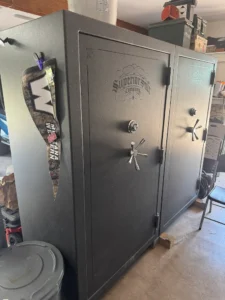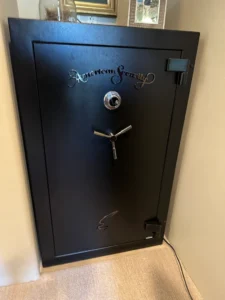
A loaded moving dolly, a flight of stairs, and a 700-pound gun safe make for a bad combination, even for people who move furniture for a living. For homeowners who try this themselves, the challenges quickly grow more complex. They face more than just the weight itself. They must deal with weight that rests unevenly on a surface never designed to support such movement, and they have no simple way to set the load down safely if it shifts halfway through.
This piece covers exactly why moving a gun safe is one of the few household jobs where “I’ll just do it myself” carries real, specific risk, and what Phoenix homeowners should know before attempting it.
TL;DR
- Most gun safes weigh several hundred to well over a thousand pounds, well beyond what standard moving equipment or a few extra hands can safely handle.
- According to OSHA, an occupational safety source on manual material handling injuries, improper lifting of heavy, awkward loads is a leading cause of serious back and joint injuries.
- Phoenix homes bring specific challenges: tile and stone flooring prone to cracking under concentrated weight, narrow hallway turns in newer builds, and extreme summer heat that affects both safe electronics and the people moving them.
- A dropped or tipped gun safe causes more than property damage. It creates a real safety hazard if it holds ammunition.
- Professional gun safe movers use purpose-built equipment, such as safe-rated dollies and rigging systems, that standard moving companies and DIY setups typically lack.
Just How Heavy Is a Gun Safe, Really?
Gun safes are intentionally heavy. Weight is a core part of their theft-resistance and fire-resistance design, not an incidental side effect. A mid-size home gun safe usually weighs several hundred pounds. Larger models made for stronger fire protection or higher security levels can weigh more than a thousand pounds even before you add anything to them.
That weight is also distributed unevenly. Steel walls, an internal fireproofing layer, and a heavy door assembly mean the center of gravity isn’t predictable the way it is with, say, a refrigerator or a couch. This is exactly the kind of load where “get a few strong friends and a dolly” stops being a reasonable plan.
Why DIY Gun Safe Moving Goes Wrong
The Weight-to-Grip Problem
Most gun safes don’t have real handles built for lifting the full unit. Whatever grip points exist are typically designed to adjust position slightly, not to bear hundreds of pounds during a move. This means any DIY lifting attempt usually depends on straps or hand positioning that wasn’t engineered for the load.
Standard Moving Equipment Isn’t Rated for It
A typical furniture dolly is built for a fraction of a loaded gun safe’s weight, and using one outside its rated capacity risks a dolly failure mid-move, which is one of the more dangerous ways this kind of job can go wrong. Purpose-built safe-moving equipment exists specifically because standard moving equipment isn’t designed for loads in this range.
Stairs and Turns Multiply the Risk
Any change in elevation or direction during a heavy move introduces a moment where the load’s momentum can shift unexpectedly. A safe that starts to tip on a staircase is extremely difficult to recover once it’s moving, both for the people involved and for anything nearby.
Injury Risk to the People Moving It
According to OSHA’s occupational injury source on manual material handling, improper lifting technique combined with heavy, awkward loads is a well-documented cause of serious back, shoulder, and joint injuries, and a gun safe checks every box that makes a lift high-risk: excessive weight, poor grip points, and an unpredictable center of gravity.
Phoenix-Specific Challenges
Flooring
Tile, stone, and polished concrete are common flooring choices in Phoenix homes, and all three are vulnerable to cracking or chipping under concentrated point loads, exactly what happens when a gun safe’s weight rests briefly on a small contact area during a move.
Home Layouts
Many newer Phoenix-area builds feature tighter hallway turns and narrower doorways than older homes, which reduces the margin for error when maneuvering a large, heavy object through a floor plan not designed with a several-hundred-pound safe in mind.
Extreme Heat
Arizona summer heat isn’t just uncomfortable for the people doing the moving; it also matters for the safe itself if it involves an electronic lock. Prolonged heat exposure during a move, such as leaving a safe in a truck bed or garage during peak summer hours, can affect electronic components in some models. Scheduling and timing matter more in Phoenix than in more temperate climates.
What Professional Gun Safe Movers Actually Use
- Safe-rated dollies and appliance skates, built for concentrated heavy loads rather than distributed furniture weight
- Rigging straps and stair-climbing equipment, designed to maintain control through elevation changes
- Floor protection systems, to prevent exactly the kind of point-load damage described above on tile, stone, or hardwood
- Trained lifting technique and team coordination, so the load is controlled at every step rather than relying on brute strength alone
Comparison: DIY Gun Safe Moving vs. Professional Gun Safe Moving
| DIY Move | Professional Move | |
|---|---|---|
| Equipment | Standard dolly, straps, manual labor | Safe-rated dollies, rigging systems, floor protection |
| Injury risk | High, due to weight and poor grip points | Minimized through trained technique and proper equipment |
| Property damage risk | Elevated, especially on tile/stone flooring and tight turns | Reduced through floor protection and controlled handling |
| Insurance/liability coverage | Typically none | Often covered by the moving company’s liability policy |
| Time and predictability | Highly variable, prone to mid-move problems | Planned and controlled from start to finish |
What to Look For When Hiring a Professional Gun Safe Mover in Phoenix
- Experience specifically with safes, not just general furniture or appliance moving, since the equipment and technique differ meaningfully
- Proper equipment on-site, including safe-rated dollies and rigging gear, is confirmed before the move date
- Liability coverage, in case of unexpected property damage during the move
- A clear plan for the specific move, including stairs, turns, and flooring type at both the origin and destination
Moving a multi-hundred-pound gun safe across the Valley without professional rigging equipment risks severe personal injury, structural tile damage, and crushed door frames. Leave the heavy lifting to our local experts.
Frequently Asked Questions
How much does a typical gun safe weigh?
Most home gun safes weigh several hundred pounds, with larger, higher-security models often exceeding a thousand pounds empty. This weight is intentional, since it’s part of what makes a safe resistant to theft and fire, but it also makes moving one without proper equipment genuinely risky.
Can two or three people safely move a gun safe on their own?
It’s not recommended. According to OSHA, an occupational safety source on manual material handling risks, a gun safe’s uneven weight distribution and lack of proper lifting handles make it a high-risk lift even with several people involved, and standard moving equipment usually isn’t rated for the load.
Will moving a gun safe damage my floors?
It can, particularly on tile, stone, or polished concrete, if the safe’s weight rests on a small contact point during the move. Professional movers typically use floor protection systems specifically to prevent this.
See also: Why Professional Safe Moving Services in Phoenix Are Worth Every Penny, Common Mistakes Homeowners Make When Moving a Heavy Safe