Most people picture a locksmith in one scenario: locked out, standing on the porch, waiting for someone to open the door. That emergency lockout call is the mental model most homeowners carry, and for a standard residential property, it covers most of what a locksmith does. For a luxury home in Phoenix, it misses almost everything that matters.
High-end residential locksmith work and traditional locksmith work share the same license and some of the same hand tools. Beyond that, they are different trades. The locks are different. The key systems are different. The client relationship is different. The security thinking is different. And the consequences of getting something wrong, a poorly cut key, a misaligned cylinder, or a restricted system handled by an unauthorized technician fall harder on a $2 million home than on a standard tract house.
This post explains exactly what separates high-end residential locksmith services from traditional work and what Phoenix luxury homeowners should understand before they hire anyone near their entry systems.
TL;DR — The Core Differences:
- High-end locksmith work requires specialty equipment, blanks, and training that most shops do not have
- Luxury locks meet precision-engineered tolerances that standard residential hardware cannot achieve.
- High-end service includes security consulting, key control systems, and documentation, not just opening doors
- The technician vetting standard is higher: background checks, licensing verification, and professional presentation matter
- North Valley Locksmith provides high-end residential locksmith services throughout Phoenix and surrounding communities
The Hardware Gap: Standard Locks vs. High-Security Systems
The most immediate and technical difference between traditional and high-end locksmith work is the hardware itself.
Traditional locksmith work centers on the locks most American homes use: Kwikset, standard Schlage, Defiant, and similar builder-grade hardware. Locksmiths easily understand these locks, find them widely available, and service them with basic tools and key blanks. Anyone can buy their key blanks at any hardware store.
Their cylinders are interchangeable across a narrow range of common profiles.
Luxury residential locks are a product category entirely different from others.
1. Medeco
Medeco cylinders rely on biaxial key cuts. Each cut is machined to a precise angle and depth, allowing it to engage both standard driver pins and rotating elements inside the cylinder. No standard key-cutting machine produces biaxial cuts. A technician who has never worked with Medeco hardware cannot correctly service a Medeco cylinder.
2. Mul-T-Lock
Mul-T-Lock uses a telescoping pin mechanism with an interactive element, a secondary pin-within-a-pin design that requires a key with a precisely dimensioned tip. The blank is proprietary, the cutting specification is exacting, and the system is patented internationally. A locksmith without Mul-T-Lock training and inventory cannot service it.
3. Schlage Primus
Schlage Primus adds a secondary sidebar mechanism to the standard Schlage pin tumbler design. Primus keys have an additional row of cuts on the blade that engage the sidebar. These cuts require an authorized blank and a machine calibrated for the Primus profile.
4. European Mortise
European mortise cylinders, common in Phoenix custom builds with imported door hardware from Italy, Germany, or Spain, use entirely different cylinder profiles from American standards. The tools, blanks, and techniques that work on American hardware do not apply.
5. Smart Lock Integration
Smart lock integration, including Lutron, Control4, Crestron, and residential-grade systems from Allegion and ASSA Abloy, requires the locksmith to understand the physical cylinder, the electronic override, the wiring integration, and how the lock communicates with the home automation system. A traditional locksmith, skilled only in mechanical hardware, cannot service the entire system.
The equipment gap is just as significant as the knowledge gap. High-security key cutting requires computerized machines calibrated for specific profiles. Silca, Ilco, and Orion systems are maintained and updated for accuracy across different lock families. These machines cost significantly more than standard duplicators and require ongoing calibration. Most traditional locksmith shops do not have them.
Traditional lock forcing methods destroy luxury finishes. Protect your home’s custom entryways with specialized technicians.
The Key System Difference: Access Control vs. Key Duplication
Traditional locksmith work treats key transactions transactionally. You need a copy; the locksmith makes a copy. You are locked out; the locksmith opens the door. The key is a physical object, and the service produces or manages it.
This distinction matters practically. A Phoenix estate with a live-in housekeeper, a weekly pool technician, a monthly HVAC contractor, a property manager, and two adult children in separate households has a complex access picture. A traditional approach cuts a key for everyone who needs one, producing an untracked collection of copies with no audit trail and no revocation mechanism beyond a full rekey whenever someone’s relationship with the household changes.
Restricted key systems: Medeco3, Mul-T-Lock MT5+, Schlage Primus, and ASSA Abloy restricted lines control duplication at the blank level. The blank is patented and available only through authorized dealers. Producing a new key requires identity verification and authorization from the registered property owner. A person who finds or steals a key from a Phoenix luxury home cannot have it duplicated at any shop the blank is physically unavailable outside controlled channels.
The key registry documents every key produced: key number, cut date, authorized by whom, and issued to whom. When a staff relationship ends, the registered key number is flagged. When a key is lost, the registry tells you exactly which key is unaccounted for and when it was last confirmed.
This is not a service most traditional locksmiths offer. It requires authorized dealer status with the restricted key manufacturers, investment in the key registry system, and a client relationship built around ongoing access management rather than one-time transactions.
The Security Consulting Difference: Reactive vs. Proactive
A traditional locksmith responds to problems: a lockout, a broken key, or a lock that no longer works. The service is reactive by nature; the client has a problem, and the locksmith fixes it.
High-end residential locksmith services include proactive security consulting as a core offering. For luxury homes in Phoenix, this looks like:
Entry point security assessments
A professional security review of every entry point, primary doors, service entries, garage access, pool gates, and secondary structures identifying vulnerabilities in the existing hardware before they are exploited. A traditional locksmith services the lock in front of them; a high-end locksmith evaluates the entire perimeter.
Lock grading and upgrade recommendations.
ANSI/BHMA grades locks from Grade 1 (commercial/highest security) through Grade 3 (light residential). Most builder-grade hardware installed in Phoenix luxury homes during construction is Grade 2 at best. A high-end locksmith identifies which locks are underperforming for the property’s value and risk profile and recommends upgrades with specific product specifications rather than generic advice.
Door hardware integration
A high-security cylinder in a weak door frame provides limited protection. A high-end locksmith assessment covers the entire entry system, frame reinforcement, strike plate depth, hinge security, and door material, not just the cylinder. A strike plate secured by half-inch screws into soft wood fails under a single kick regardless of the lock grade above it.
Coordination with other security systems
Phoenix luxury homes typically integrate locks with alarm systems, camera networks, and home automation. High-end locksmith services include selecting and installing hardware compatible with these systems, both physically and electronically, rather than treating the lock as an isolated component.
New construction and renovation security planning
Consulting during the build phase is far more effective than retrofitting security after a home is complete. High-end locksmiths work with Phoenix architects, custom home builders, and renovation contractors to specify entry hardware, plan key systems, and ensure door rough-ins are sized correctly for the specified hardware before drywall goes up.
The Technician Standard: Who Is Coming to Your Door
This is where the difference between traditional and high-end residential locksmith services becomes most personal. In traditional locksmith work, the technician’s response to an emergency lockout call is often quick, and the client’s bar is low; they are locked out, and they are relieved when the door opens and the transaction is complete. The vetting standard for the technician in that scenario is effectively: did they open the door?
At a luxury home, the locksmith technician is being invited into close proximity with the property’s entire physical security infrastructure. They see the entry hardware, the key systems, and the layout of access points. They handle keys and know the property is occupied or unoccupied based on the appointment. The trust requirement is categorically different.
High-end residential locksmith services require a correspondingly higher standard for technician vetting and presentation:
Background checks
Every technician working in luxury residential properties should have a clean, documented background check. This is not optional; it is a baseline. Ask any locksmith you are considering for luxury residential work whether their technicians are background-screened. The answer tells you immediately which tier of service you are dealing with.
Arizona locksmith licensing
Arizona requires locksmith licensing under ARS Title 32. A licensed technician has passed the state’s competency and background requirements. Ask for license verification before any technician enters your property. Unlicensed operators exist in the Phoenix market and take on residential work.
Marked vehicles and uniformed technicians
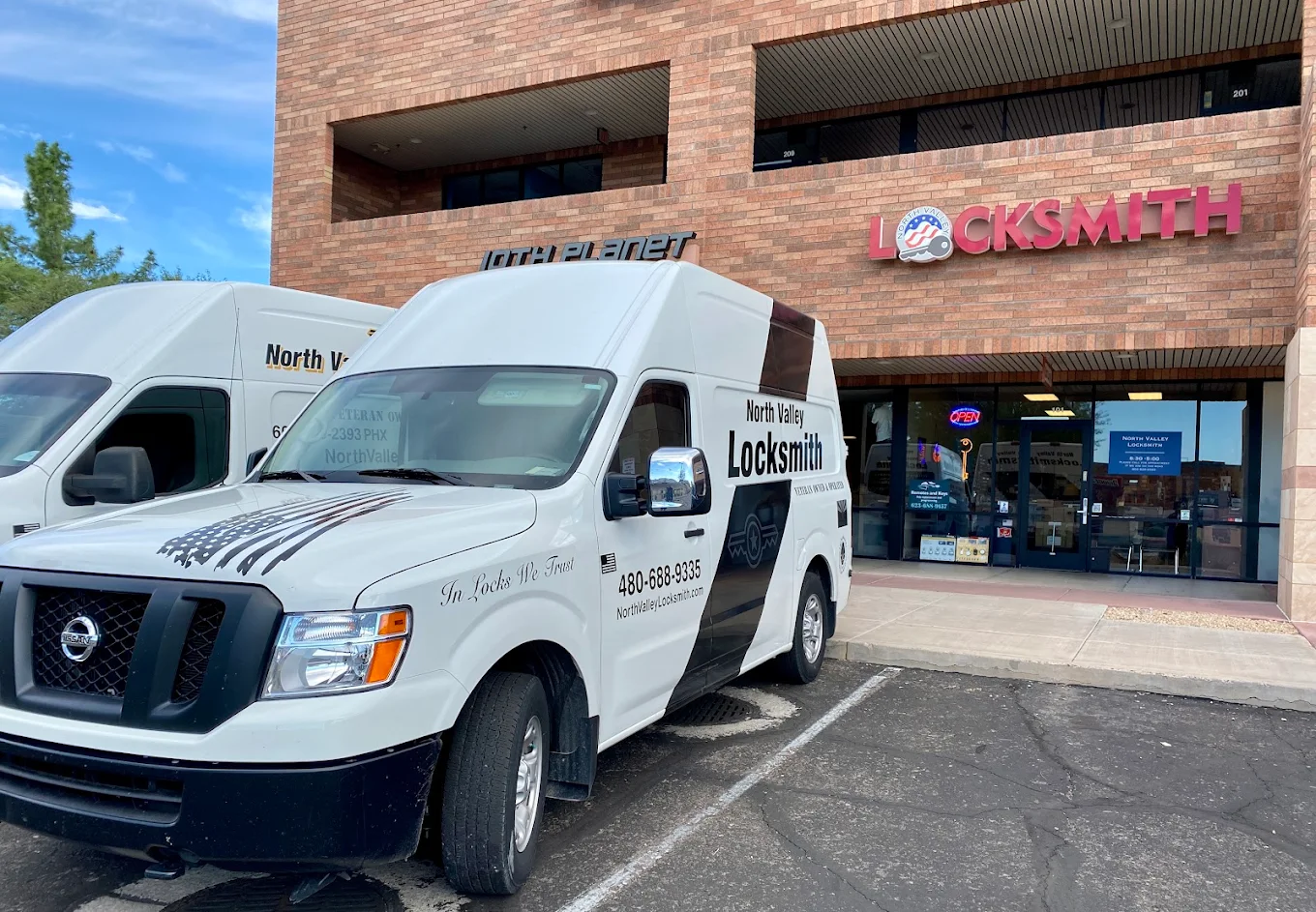
Professional identification matters. A high-end locksmith technician arrives in a clearly marked company vehicle, in uniform, with identifiable credentials. An unmarked vehicle and plain clothes are a presentation standard appropriate for a 2 AM lockout call, not for a scheduled appointment at a $3 million Paradise Valley home.
Manufacturer training and certification
High-security lock manufacturers Medeco, Mul-T-Lock, and ASSA Abloy provide authorized dealer and technician training programs. A technician certified by the manufacturer knows the product to its full specification, not just well enough to get through most jobs. Ask whether the technician is manufacturer-trained for the specific lock brand on your property.
Discretion
Luxury residential clients have legitimate privacy expectations. A high-end locksmith understands that the details of a client’s property, key system, access schedule, and household composition are confidential. This is a professional standard, not an unusual request.
North Valley Locksmith holds all technicians working on Phoenix luxury residential properties to these standards: background checks, ARS Title 32 licensing, marked vehicles, and manufacturer training for the high-security brands we service.
Looking for professional security implementation that respects your home’s design and asset profile?
Upgrade Your Security: Consult Our SpecialistsThe Documentation Difference: Records vs. Receipts
Traditional locksmith work leaves a receipt. High-end residential locksmith services leave a documented service record.
For luxury homeowners, documentation matters in ways it does not for standard residential work:
Key registry records. Every key is produced, numbered, and attributed to an authorized recipient. Updated with each new cut, each return, and each revocation.
Service history by property. A record of every service call that was assessed, what was changed, and what was recommended and deferred. For a long-term client relationship on a Phoenix estate, this history serves as the foundation for ongoing security management, rather than starting fresh at each visit.
Lock hardware specifications on file. The manufacturer, model, cylinder profile, key code, and bitting specification for every lock on the property. This eliminates delays and errors when future service is needed and ensures that key cutting is always done to the correct specification rather than from a worn copy.
Warranty and manufacturer documentation. High-security locks carry manufacturer warranties. Proper installation documentation is required to make warranty claims. A high-end locksmith provides this documentation at installation; a traditional shop often does not.
The Relationship Difference: Transaction vs. Partnership
Traditional locksmith work is fundamentally transactional. A need arises, a call is made, the need is met, and the transaction ends. The client and the locksmith have no ongoing relationship. The locksmith may not remember the property the next time they are called.
High-end residential locksmith services function as an ongoing partnership with the property. North Valley Locksmith maintains client profiles for our Phoenix luxury residential accounts, including property addresses, lock hardware on file, key registries, service histories, and contact preferences. When something changes at the property, a new entry door, a staff change, a renovation, or a security concern, we are already familiar with the full picture.
This relationship model serves the client’s security in ways a transactional model cannot. Security is not a one-time installation; it is an ongoing condition of the property that evolves with the household, the hardware, and the threat environment. A locksmith who knows your property is in a better position to advise, respond to, and maintain it than one who starts from scratch at every call.
What to Expect When You Call North Valley Locksmith for Luxury Residential Service
When a Phoenix luxury homeowner contacts us, the process is different from a standard locksmith call in several specific ways:
Initial consultation, not just a dispatch. We ask about the property, the existing hardware, and what the homeowner is trying to accomplish before dispatching a technician. This conversation ensures the right technician with the right inventory arrives the first time.
Confirmed blank availability before the appointment. We verify that we stock the required blanks for your lock system before scheduling, so the appointment is not wasted on a sourcing delay.
On-site or in-shop options. Luxury residential clients choose the service format that works for their property and schedule. On-site appointments are available throughout Phoenix, Paradise Valley, Scottsdale, Glendale, and North Phoenix communities, including Moon Valley, Deer Valley, and Norterra.
Written service summary after every appointment. What was assessed, what was completed, and what was recommended. Not a receipt, a record.
Ongoing account relationship. Your property, hardware, and key registry are on file. Available when you need us, familiar with your property when you call.
Advanced Key Control. Superior Mechanical Standards.
We map your property’s entire structural profile to engineer bespoke master key layouts and smart entry system backups without disrupting the structural integrity of your doors.
Schedule an Estate AssessmentFrequently Asked Questions
What makes a locksmith “high-end” versus a standard residential locksmith?
Three things set high-end residential locksmiths apart from traditional ones: specialized equipment and blank inventory for high-security lock brands, the ability to design and manage restricted key systems with documented access control, and a service model that includes security consulting and ongoing property relationships—not just emergency response. High-end locksmiths are also held to higher technician vetting standards, including manufacturer certification and background checks.
Do I need a high-end locksmith if my Phoenix home already has good locks?
The lock is only part of the picture. If you have quality hardware but no key control system, an untracked number of key copies, no documentation of who has access, or locks installed without a perimeter security assessment, a high-end locksmith service adds value even with existing hardware in place. Key registry setup, access audit, and entry point review are services that apply regardless of the age or quality of your current locks.
How do I verify that a Phoenix locksmith is qualified to work on high-security residential locks?
Ask three specific questions: Does the shop stock the correct proprietary blank for your lock brand? Is the technician manufacturer-trained or certified for that brand? Is the shop an authorized dealer for restricted key systems? If you have or want one, is it an authorized dealer? A qualified locksmith answers all three clearly. Vague answers or redirection to “we can handle most locks” are not qualified answers for high-security work.
Is a high-end residential locksmith service significantly more expensive than traditional locksmith work?
Professional rates for high-end residential service are higher than standard locksmith rates, primarily because of the specialized equipment, proprietary blank costs, manufacturer training, and technician vetting involved. However, the comparison is not entirely apples to apples a traditional locksmith cannot perform the services a high-end residential locksmith provides. The relevant comparison is between professional high-end service and the costs of hardware damage, security gaps, or a full rekey resulting from improper service on a high-security lock.
Can a traditional locksmith damage my high-security lock?
Yes. Attempting to pick, bypass, or cut keys for a high-security lock without the correct training, tools, and blanks can damage the cylinder’s internal components, pin stacks, rotating elements, and sidebar mechanisms in ways that are not immediately visible but degrade the lock’s performance and security over time. In some cases, an incorrect duplication attempt can score the cylinder’s keyway, requiring full cylinder replacement. High-security locks are precision instruments; they are not forgiving of improper technique.
What is the first thing I should do when I move into a Phoenix luxury home?
Contact a high-end residential locksmith for a move-in security review before making any changes on your own. The review should cover: identification of all lock types and brands on the property, an assessment of the existing key system and how many copies may exist, a recommendation on rekeying versus full lock replacement based on the hardware age and condition, and a proposal for a restricted key system if the property does not already have documented key control. Starting your occupancy with a verified, documented key inventory is the single most effective first step in security.
Does North Valley Locksmith offer ongoing service accounts for Phoenix luxury homeowners?
Yes. We maintain client profiles for our Phoenix luxury residential accounts, including lock hardware specifications, key registries, and service history. Ongoing accounts receive priority scheduling, consistent technician assignment when possible, and a point of contact familiar with the property. This account relationship is available to homeowners seeking a locksmith partner rather than a one-time service provider.
How does smart home integration affect luxury residential locksmith work?
Smart locks, including products from Schlage Encode, Yale, August, and integrated systems on Control4 or Crestron platforms, require the locksmith to understand both the physical cylinder and the electronic system. High-end residential locksmiths work with full integration: mechanical installation, electronic pairing, access code management, and coordination with the home automation or security monitoring system. Traditional locksmiths, trained only in mechanical hardware, cannot service electronic components or advise on system integration.
See also: Professional Key Cutting for Luxury Homes in Moon Valley, Phoenix | Protecting Your Phoenix Estate After a Home Renovation